
How to Choose the Right Dump Truck Hydraulic Hoist in 2026
Choosing a Dump Truck Hydraulic Hoist in 2026 is not just a matter of matching a cylinder to a truck. The hoist must lift the intended payload, fit the chassis, and work reliably through repeated loading cycles. That decision matters across a large freight economy: the U.S. Department of Transportation’s Bureau of Transportation Statistics reported that trucks carried 65.5% of domestic freight by weight in 2022 in Freight Facts and Figures 2023. The figure covers freight broadly, not dump-truck hoists specifically, but it shows why dependable truck equipment deserves careful selection.
Start with the details that shape real performance: rated payload, body length, mounting geometry, hydraulic pressure, and the material being tipped. Wet soil, gravel, and sticky clay do not behave alike in a raised body. Nor does a hoist’s advertised lifting capacity tell the whole story if its stroke, stages, or installation points do not suit the vehicle. Check the truck and hoist manufacturers’ technical specifications, and have a qualified installer verify compatibility before purchase. Small mismatches can become expensive.
The hard part is often overlooked. A system that lifts a test load may still struggle under uneven loading, frequent cycles, or cold starts. Compare service access, seal availability, warranty terms, and documented duty-cycle guidance—not just price. This guide explains how to assess those factors, compare hoist designs, and ask suppliers useful questions. One caution: published specifications may not reflect your actual working conditions. Measure twice. Then choose for the job you truly have, not the one shown in a brochure.

Understand Dump Truck Hydraulic Hoist Types and Operating Principles
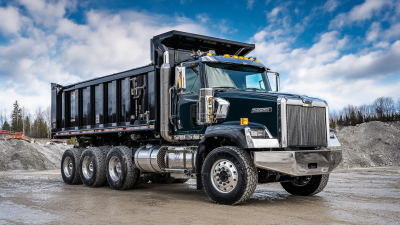
Dump truck hoists generally use front-mounted telescopic cylinders or underbody scissor-style cylinders. A telescopic hoist extends nested stages in sequence, creating a long lift from a compact cylinder. An underbody design pushes through a linkage beneath the body, which can suit certain chassis and body layouts. The right type depends on body length, rated payload, mounting space, and the dump angle needed at the job site.
The operating cycle is straightforward, but the details matter. A power take-off drives a hydraulic pump, which sends oil through a control valve into the cylinder. Pressure extends the piston and raises the loaded body. When the valve opens the return path, gravity lowers the body while oil flows back to the reservoir. A relief valve limits excessive pressure; hose condition, oil cleanliness, and correct mounting also affect dependable operation. It is easy to overlook the return stroke.
The U.S. Department of Energy’s Improving Pumping System Performance: A Sourcebook for Industry reports that optimized pumping systems can often reduce energy use by 20–50%. That figure applies to pumping systems broadly, not directly to dump-truck hoists, whose duty cycles differ. Still, it reinforces the value of matching pump flow and pressure to the work rather than choosing by lifting capacity alone. Before selection, compare the hoist’s rated pressure and stroke with the loaded body’s geometry. A quick visual check helps, but it cannot replace the manufacturer’s engineering data.
How to Choose the Right Dump Truck Hydraulic Hoist in 2026 - Understand Dump Truck Hydraulic Hoist Types and Operating Principles
| Hoist Type | How It Works | Typical Applications | Key Advantages | Main Considerations | Best-Fit Selection Clue |
|---|---|---|---|---|---|
| Front-mounted telescopic hoist | A multi-stage hydraulic cylinder is mounted near the front of the dump body. Pressurized oil extends the cylinder in stages, raising the front of the body around its rear hinge. Gravity lowers the body as oil returns through the control valve. | Many road-going rigid dump trucks and heavy-duty tipper trucks carrying bulk materials. | Direct lifting arrangement; the cylinder can provide substantial lift while keeping much of the hoist mechanism away from the rear discharge area. | Requires suitable chassis and body-frame mounting points. Cylinder sizing, stroke, stability, and body geometry must be matched to the vehicle and load. | Consider it when the truck is designed for a front-hoist layout and needs a direct, high-capacity body-lifting system. |
| Underbody telescopic hoist | A telescopic cylinder is installed beneath the dump body. As hydraulic pressure extends the cylinder, its linkage or mounting geometry lifts the body from below; lowering is controlled as oil returns to the reservoir. | Some medium-duty trucks, shorter-wheelbase vehicles, and applications where an underbody arrangement suits the chassis layout. | Can fit layouts where a front-mounted cylinder is impractical; the installation may be packaged beneath the body. | Available space, ground clearance, cylinder protection, and the leverage produced by the mounting geometry need careful evaluation. | Consider it when chassis packaging favors an underbody installation and the lifting geometry is compatible with the body. |
| Scissor hoist | One or more hydraulic cylinders extend a crossed-link mechanism. The scissor arms open to raise the dump body, converting cylinder movement into vertical lift. | Some dump trailers, compact vehicles, and installations requiring a guided lift path or a particular underbody arrangement. | Provides a supported lifting path and can be useful where the cylinder cannot act directly through the required body-lift geometry. | Linkages add joints and structural components that require inspection and maintenance. Pinch points and clearance must be managed. | Consider it when the vehicle layout benefits from a linkage-based lift and the added mechanism can be accommodated. |
| Single-acting hydraulic hoist | Hydraulic pressure drives the cylinder in the lifting direction. The body typically lowers under its own weight when the control valve allows oil to return to the tank. | Common dump-body arrangements where gravity is sufficient to lower the body. | Simpler hydraulic circuit than a double-acting arrangement; uses gravity for the lowering stroke. | Lowering depends on body weight, load distribution, oil flow, and valve control. The load must not be released abruptly. | Consider it when the body can lower reliably by gravity and the system is designed for controlled return flow. |
| Double-acting hydraulic hoist | Hydraulic pressure is applied to drive the cylinder in both directions, allowing powered extension and retraction where the cylinder and circuit are designed for double-acting operation. | Specialized applications that require powered movement in both directions or where gravity alone does not provide the required return action. | Offers positive hydraulic control of both extension and retraction. | Requires a compatible cylinder, control valve, and hydraulic circuit. System design should account for operating pressure, return flow, and safe lowering. | Consider it only when powered retraction is needed and the complete hydraulic system is designed to support it. |
| Single-stage cylinder | A single piston rod extends from the cylinder barrel to provide the required lifting stroke. | Applications with enough installation length for the cylinder and a lift geometry that can be achieved with one stage. | Fewer moving stages than a telescopic cylinder, which can simplify the cylinder arrangement. | The required stroke and retracted length must fit the vehicle. A long stroke may make packaging difficult. | Consider it when the required stroke is moderate and available mounting space is sufficient. |
| Multi-stage telescopic cylinder | Nested sleeves extend sequentially under hydraulic pressure, producing a long stroke from a relatively compact retracted cylinder. Retraction generally occurs in reverse order as oil returns. | Dump bodies needing substantial lift travel where a long single-stage cylinder would not fit. | Combines a long extension stroke with a shorter retracted length. | Stage sequence, mounting alignment, oil supply, sealing, and maintenance requirements should be checked against the application. | Consider it when the body needs a long lift stroke but the chassis has limited space for the retracted cylinder. |
Selection and operating note: Confirm the hoist type and cylinder configuration against the truck chassis, dump-body geometry, rated payload, material behavior, hydraulic pump and valve specifications, and manufacturer-approved installation limits. Operate only on firm, level ground when required by the vehicle instructions; keep people clear of the raised body, and use the approved body prop before working beneath it. Never rely on hydraulic pressure alone to support a raised body.
Related Posts
-
2026 Top Dump Truck Hydraulic Hoist Types for Global Buyers?
-
China Top 10 Telescopic Cylinder Manufacturers
-
7 Best Practices for Using Dump Truck Hydraulic Hoist Effectively
-
How to Maximize Efficiency in Your Dump Truck Hydraulic Hoist Operations
-

2026 Best Hydraulic Cylinder For Trailer Buying Guide?
-

How to Choose the Best Hydraulic Cylinder for Trailer Use?