index-bg-11

2026 Top Hydraulic Cylinder for Forklift Buyers Guide?

Choosing a Hydraulic Cylinder For Forklift requires more than comparing bore sizes, prices, and delivery dates. The cylinder works beneath heavy loads, repeated impacts, and changing warehouse surfaces. A small seal leak can reduce lifting speed, stain a concrete floor, and create an avoidable safety concern. This 2026 buyer’s guide examines practical selection details, including load capacity, stroke length, mounting dimensions, rod coating, seal materials, and service access.

Brendan Casey, a respected hydraulic systems consultant and author, has stated, “The number one cause of hydraulic component failure is contamination.” That warning remains highly relevant for forklift buyers. Clean oil, protected ports, correct filtration, and disciplined maintenance can extend cylinder life. Ask for tested pressure ratings and documented material specifications. Do not rely on appearance alone.

Measure twice.

A suitable Hydraulic Cylinder For Forklift should match the truck’s original geometry, not merely fit inside the available space. Check retracted length, pin diameter, clevis width, and hydraulic connection position. Consider cold starts, dusty yards, moisture, and frequent short lifting cycles. These details often expose weak seals or undersized rods before warranty periods end.

No guide is flawless. Real operating conditions can defeat a perfect specification sheet. Some buyers may also overestimate theoretical capacity and underestimate installation quality. Therefore, inspect the existing cylinder, review maintenance records, and consult a qualified hydraulic technician before ordering. Reliable purchasing combines field experience, engineering evidence, and honest questions about failure risks.

2026 Top Hydraulic Cylinder for Forklift Buyers Guide?

Forklift Hydraulic Cylinder Basics and Core Functions

Forklift Hydraulic Cylinder Basics and Core Functions

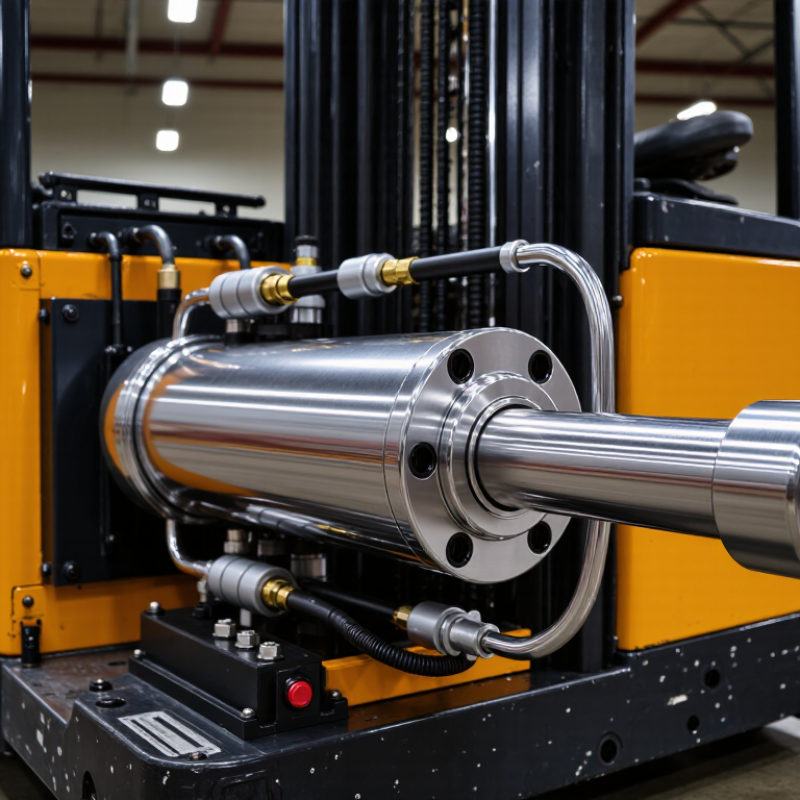
A hydraulic cylinder converts pressurized fluid into controlled linear movement. On a forklift, it raises the carriage and tilts the mast or forks. Its main parts include a barrel, piston, rod, seals, and mounting points.

When the pump sends oil into the cylinder, pressure pushes the piston forward. The rod then transfers that force to the lifting mechanism. Flow controls movement speed, while pressure controls available lifting force.

Small seal damage can cause slow lifting, oil leakage, or uneven fork movement. The cylinder does not work alone.

The hydraulic system must match the forklift’s rated capacity and load center.

Excessive weight increases pressure and accelerates wear around the rod and seals. During routine checks, inspect the rod for pitting, bending, and fresh oil marks. Watch the forks during lifting. They should move smoothly without jerking or drifting.

A warm cylinder may indicate internal leakage, restricted flow, or overworked components. Clean hydraulic oil matters because fine particles can scratch polished surfaces and damage seals.

In practical maintenance, recording leak location and lifting behavior saves diagnostic time. Still, visual inspection is not enough; pressure testing may reveal hidden faults.

I have seen operators blame the cylinder when contaminated oil caused the real problem. That assumption can delay proper repair.

Cylinder selection also requires checking stroke length, mounting dimensions, working pressure, and retracted length. A perfect-looking replacement can fail if one measurement is wrong.

How to Match a Cylinder with Your Forklift Requirements

Matching a hydraulic cylinder to a forklift starts with the load, not the catalog number. Measure rated capacity, lift height, carriage travel, and available mounting space. A cylinder must deliver enough force without reaching its pressure limit. For a rough check, force equals pressure multiplied by piston area. Include friction and side loading, because real masts rarely move perfectly straight.

ISO 3691-1 requires stability and functional safety controls for industrial trucks. OSHA also reports that powered industrial trucks cause about 35,000 serious injuries and 85 fatal accidents annually in the United States. These figures make seal quality, rod strength, and controlled lowering practical safety issues. Check the cylinder’s working pressure, stroke tolerance, port size, and retracted length. A mismatch may create slow lifting, uneven mast movement, or dangerous drift.

Field inspection adds details that specifications often miss. Look for polished rod scoring, oil around the gland, bent pins, and hose abrasion near the tilt cylinder. Match the replacement cylinder’s mounting pin diameter and center-to-center length exactly. Small errors matter. Hydraulic fluid compatibility also matters, especially in cold warehouses or dusty yards. SAE research on hydraulic contamination shows that particle contamination accelerates component wear, so filtration and clean installation deserve equal attention. A calculation can look correct and still fail in service. Recheck the actual load, duty cycle, temperature, and operator habits before approval.

Key Specifications for Comparing Hydraulic Cylinder Options

2026 Top Hydraulic Cylinder for Forklift Buyers Guide

When comparing forklift hydraulic cylinders, start with the load. Calculate required force from rated capacity, lift geometry, and operating pressure. Bore diameter determines pushing force, while rod diameter affects strength and buckling resistance. A larger cylinder is not always better. It may reduce lifting speed and increase hydraulic demand.

Measure the existing cylinder carefully. Record retracted length, extended length, stroke, pin diameter, mounting width, and port position. A small dimensional error can prevent installation. Check the working pressure and confirm that the safety margin suits repeated lifting cycles. Flow requirements also matter because they influence lifting speed and heat generation. In practical inspections, worn rod surfaces often reveal contamination or poor alignment before seal failure appears.

Seal material should match the workplace temperature, fluid type, and exposure to dust or moisture. Consider corrosion protection for outdoor yards and coastal environments. Side loading deserves attention. Forklift masts can transfer uneven forces into the cylinder, especially when loads are off-center. Use suitable guides and inspect mounting pins for oval wear. A perfect specification sheet still misses real operating conditions. That is the part buyers sometimes underestimate. Request pressure-test records, dimensional tolerances, and replacement-part availability. Compare the complete service cost, not only the purchase price.

Installation, Maintenance, and Safety Inspection Guidelines

2026 Top Hydraulic Cylinder for Forklift Buyers Guide: Installation, Maintenance, and Safety Inspection Guidelines

A forklift hydraulic cylinder deserves more than a quick visual check. OSHA safety data estimates about 85 annual forklift fatalities and 34,900 serious injuries in the United States. Some incidents involve hydraulic failures, unstable loads, or poor maintenance. During installation, lower the forks, isolate power, and block raised components with approved supports. Never trust hydraulic pressure alone. Clean every port before connection. Even a small grain of dirt can damage a seal or valve. Align the cylinder precisely, then tighten fittings to the equipment maker’s specified torque. Misalignment often creates uneven rod wear. Bleed trapped air slowly and test movement without a load.

Maintenance should follow operating hours, not guesswork. Inspect the rod for pitting, scoring, and oil trails. Check hose connections after the first operating cycle. A cylinder that drifts with the control released needs immediate investigation. ISO 4413 hydraulic safety guidance emphasizes controlling stored energy and preventing unexpected movement. OSHA 29 CFR 1910.178 also requires powered industrial trucks to remain safe and properly maintained. Records matter. Write down pressure-test results, seal changes, and abnormal noise. In practice, technicians sometimes replace seals too quickly. The worn rod or contaminated fluid may be the real cause.

Tips: Use cardboard to locate leaks, never bare hands. Keep forks fully lowered during parking. Mark any damaged cylinder “out of service.” Recheck alignment after installation. Do not skip the awkward inspection steps; they are often the important ones.

2026 Buying Checklist for Selecting a Reliable Supplier

2026 Top Hydraulic Cylinder for Forklift Buyers Guide

When selecting a hydraulic cylinder supplier in 2026, begin with your forklift’s actual working conditions. Record lifting capacity, operating pressure, stroke length, mounting points, and daily cycle count. A cylinder that fits on paper may fail under repeated warehouse impacts.

Ask suppliers for material specifications, seal details, surface treatment, and dimensional inspection records. Confirm whether each cylinder receives pressure testing before shipment. Request drawings, installation instructions, maintenance guidance, and clear traceability for critical components. These documents show professional control, not just persuasive sales language.

Supplier reliability also depends on service after delivery. Check realistic lead times, spare seal availability, warranty limits, and technical response times. Ask how urgent failures are handled. A useful supplier should explain causes, not simply send another part. Field teams often notice rod scoring, uneven lifting, or oil leakage before a full failure occurs. Discuss these warning signs during evaluation. Do not choose solely by price. I have seen low initial costs become expensive after repeated seal changes. Still, a long checklist cannot predict every duty cycle. Recheck the supplier’s recommendations against your operators’ actual habits, because real use is sometimes rougher than the specification.

2026 Top Hydraulic Cylinder for Forklift Buyers Guide? – 2026 Buying Checklist for Selecting a Reliable Supplier
Category Buying Checkpoint Recommended Requirement or Benchmark How to Verify Priority Supplier Warning Signs
Application Fit Forklift model, mast type, and cylinder position Supplier should confirm the truck model, mast configuration, lift height, mounting points, and whether the cylinder is used for lift, tilt, or side-shift functions. Provide the original cylinder drawing, nameplate information, dimensions, or clear photographs with measurements. Critical Quote is issued without requesting application or dimensional information.
Load Capacity Rated force and working load Rated cylinder force must be calculated from the hydraulic pressure, piston area, linkage geometry, and required safety margin. Do not select by bore size alone. Request a calculation sheet showing pressure, bore area, rod area where applicable, mechanical leverage, and design load. Critical Supplier guarantees compatibility using only the forklift lifting capacity.
Pressure Rating Working and proof pressure Working pressure should meet or exceed the forklift hydraulic system specification. Proof pressure is commonly higher than working pressure, but the exact value must be confirmed by the design standard and application. Compare the cylinder datasheet with the forklift service manual and request documented pressure-test results. Critical Only a maximum pressure is listed, with no distinction between working and test pressure.
Dimensions Bore, rod diameter, stroke, and retracted length All mounting and travel dimensions should match the original component or approved engineering drawing. Stroke tolerance must not cause mast overtravel or insufficient lift. Check bore, rod, stroke, center-to-center length, port location, pin diameter, and mounting width using calibrated tools. Critical Supplier provides nominal dimensions but no allowable tolerances.
Mounting Pin, clevis, flange, and spherical bearing design Mounting geometry should prevent side loading. Pins and bushings must match the original fit, material, and load direction. Review an approved drawing and verify pin-hole size, mounting width, offset, alignment, and articulation range. Critical Mounting details are described as “standard” without a controlled drawing.
Rod and Tube Rod surface, hardness, and corrosion protection Rod should have a consistent polished finish, suitable surface hardness, and corrosion protection appropriate for the operating environment. Surface treatment must be specified rather than assumed. Request material certificates, surface-treatment details, hardness records, and visual inspection criteria. Critical Rod coating is advertised only as “chrome plated” with no thickness, hardness, or corrosion data.
Materials Tube, piston, rod, and seal material traceability Materials should be selected for pressure, fatigue, temperature, and contamination conditions. Heat numbers or batch records should be traceable to the production order. Review material certificates and confirm that the certificate identifiers match the cylinder or batch documentation. Critical Material certificates are unavailable or cannot be linked to delivered parts.
Sealing System Seal compatibility and leakage resistance Seal compounds must be compatible with the hydraulic fluid, temperature range, pressure, speed, and storage conditions. Seal design should address rod wiping and pressure retention. Request seal material, operating temperature range, fluid compatibility, and static/dynamic leakage-test criteria. Critical Generic seals are used without fluid or temperature compatibility information.
Hydraulic Ports Port thread, size, orientation, and cleanliness Port specification must match the forklift hose and fitting system. Port orientation should prevent hose interference throughout the full cylinder stroke. Verify thread type, nominal size, port position, protective plugs, and cleanliness before installation. Critical Ports are selected after production or are described only as “standard thread.”
Testing Pressure, leakage, stroke, and dimensional inspection Every cylinder should undergo documented functional and pressure testing appropriate to its design. Test acceptance criteria should be defined before shipment. Request inspection reports containing serial or batch identification, test pressure, test duration, leakage result, and inspector approval. Critical Supplier provides a certificate without test values, dates, or traceability.
Quality System Process control and nonconformance handling A reliable supplier should maintain controlled drawings, incoming inspection, process checks, final inspection, calibration records, and corrective-action procedures. Review quality-system documentation, sample inspection records, calibration status, and the process for handling defective parts. Important Quality depends only on final visual inspection or operator experience.
Standards Applicable technical and safety requirements The cylinder and its integration into the forklift should comply with applicable local regulations, forklift safety requirements, and the purchaser’s engineering specifications. Ask the supplier to identify the standards used for design, testing, materials, and documentation; verify applicability for the destination market. Critical Compliance is claimed generally without identifying the applicable requirements.
Durability Cycle life and fatigue validation Cycle-life expectations should be based on duty cycle, load spectrum, operating pressure, contamination, and maintenance conditions rather than a universal hour rating. Provide the expected daily cycles and load profile; request validation results for a comparable design or application. Important Long service life is promised without test conditions or duty-cycle assumptions.
Operating Environment Temperature, dust, moisture, and chemical exposure Specify the minimum and maximum operating temperatures, outdoor exposure, wash-down conditions, abrasive dust, and any corrosive chemicals. Confirm seal, coating, wiper, paint, and storage specifications for the actual work environment. Important One seal and coating package is offered for every environment.
Installation Alignment and side-load control The installation should avoid bending loads, misalignment, twisted hoses, and mechanical interference. Side load should be controlled by the forklift structure or approved guiding components. Use the installation drawing and inspect alignment at retracted, mid-stroke, and fully extended positions. Critical Supplier accepts side loading without defining a permissible load or alignment limit.
Documentation Technical file and maintenance information Required documents should include approved drawing, datasheet, installation instructions, pressure-test record, material or batch traceability, and replacement-seal information. Use a document checklist during quotation review and require documents before shipment where practical. Important Documentation is promised only after a failure or warranty claim.
Warranty Coverage, exclusions, and claim response Warranty terms should state coverage period, start date, excluded conditions, evidence required, replacement policy, and response time for technical claims. Obtain signed warranty terms and confirm whether labor, freight, seals, and consequential damage are included or excluded. Important Warranty is verbal, vague, or conditional on undisclosed maintenance requirements.
Spare Parts Seal kits and replacement components Supplier should identify seal-kit part numbers, material options, storage limits, and availability of wear rings, wipers, bushings, and mounting hardware. Request a spare-parts list and verify lead times for routine maintenance items. Recommended Seals are supplied without material identification or replacement instructions.
Supply Reliability Capacity, lead time, and change control Supplier should provide realistic production lead time, inspection time, packaging schedule, and advance notice of changes to materials, seals, processes, or subcontractors. Review recent delivery performance, capacity evidence, approved-substitute rules, and engineering-change procedures. Important Lead time is guaranteed without capacity planning or change-control commitments.
Packaging Protection during transport and storage Ports should be capped, the rod should be protected from impact and moisture, and the cylinder should be restrained to prevent bending or surface damage. Approve packaging photographs or a packaging specification before the first shipment. Recommended Exposed rods, open ports, or loose cylinders are packed without protection.
Commercial Review Total cost of ownership Compare purchase price together with freight, inspection, installation, seal replacement, downtime risk, warranty support, and expected service interval. Evaluate at least two technically equivalent quotations using the same specification and acceptance criteria. Important Lowest unit price is presented without technical equivalence or lifecycle-cost analysis.
Buyer rule: Final selection should be based on verified dimensional compatibility, pressure and load requirements, documented testing, traceability, service support, and total cost of ownership—not on price or nominal bore size alone.