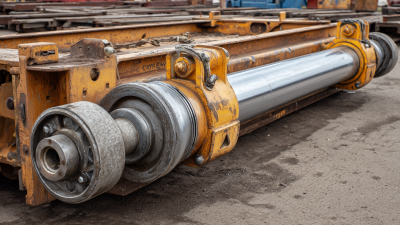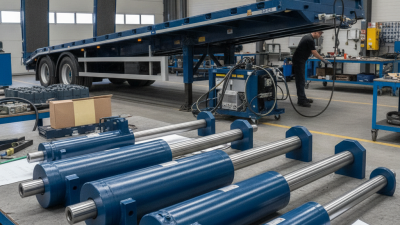
Choosing the right Hydraulic Cylinder For Trailer starts with more than lifting capacity. It requires a clear view of payload, tipping angle, mounting space, oil pressure, and working conditions. A cylinder that performs smoothly in a factory yard may struggle on a dusty construction route. Small details matter. Rod diameter, retracted length, seal quality, and pin alignment can decide whether a trailer tips safely or develops costly downtime.
Industry data shows why this component deserves careful selection. MarketsandMarkets reported that the global hydraulic cylinders market could grow from approximately USD 14.2 billion in 2023 to USD 20.1 billion by 2028, representing a 7.2% compound annual growth rate. Grand View Research also identifies construction, agriculture, material handling, and transportation as important demand areas. These reports indicate expanding equipment use, but market growth does not guarantee product quality. Buyers still need verified specifications, traceable materials, and realistic duty-cycle testing.
This 2026 guide compares telescopic, single-acting, double-acting, front-mount, underbody, and side-tipping cylinder types. It considers force calculations, pressure ratings, stroke length, corrosion exposure, installation geometry, and maintenance access. ISO 6020/2 and ISO 6022 provide useful reference points for hydraulic cylinder dimensions and performance. Still, standards cannot replace field judgment. A neat catalog number may hide poor alignment or insufficient safety margin. We may also overvalue maximum force while ignoring return speed and seal wear. The best choice is balanced, documented, and matched to the trailer’s actual workload. Safety comes before marketing claims.
A trailer cylinder converts hydraulic pressure into controlled lifting force. In practice, bore size sets pushing capacity, while stroke determines the trailer’s tipping angle. A larger bore is not always better. It can increase oil demand, weight, and cycle time.
For trailer applications, choose a cylinder by load, stroke, mounting position, operating pressure, and retracted length. A telescopic cylinder suits dump bodies with limited installation space. A single-stage cylinder may offer simpler maintenance.
Check the rod surface carefully. Mud, salt, and damaged paint can accelerate seal wear. ISO 4413 recommends controlling hydraulic risks through proper system design, pressure limitation, and maintenance.
Field inspections should include hose swelling, oil leakage, loose pins, and uneven lifting. I have seen calculations look correct, yet poor pivot alignment caused side loading. That mistake is easy to underestimate.
Keep the cylinder rod clean before retraction. Support the trailer mechanically during servicing. Never rely on hydraulic pressure alone. Record cycle time and oil temperature during heavy use. These small notes can reveal problems early, although real operating conditions may still expose weaknesses.
2026 Top Hydraulic Cylinder For Trailer Types Guide
Main Hydraulic Cylinder Types Used in Trailers
Hydraulic cylinders turn pump pressure into lifting or pushing force. In trailer applications, telescopic cylinders are common for dump bodies. Their nested stages extend from a compact barrel and create long lifting strokes. Single-acting telescopic cylinders rely on gravity for retraction. They suit rear-dump trailers with simple unloading cycles. Double-acting cylinders control extension and return. They work better on side tippers, ejector trailers, and uneven ground.
Welded cylinders handle high loads and limited space. Tie-rod cylinders offer easier maintenance and are often used on lighter trailer mechanisms. Plunger cylinders provide strong vertical lifting, but their exposed rods need careful protection. According to Grand View Research’s hydraulic cylinders market report, the global market exceeded USD 15 billion in 2023 and is projected to grow through 2030. This expansion reflects demand from transport, construction, and material-handling equipment.
Selection should match the trailer’s payload, stroke, mounting angle, and working pressure. A larger bore increases force, but it can slow movement if pump flow stays unchanged. Small details matter. Check rod buckling, pin wear, hose routing, and oil contamination during inspection. In field service, undersized cylinders often show uneven lifting first. I would still recheck the pressure calculation, because real loads rarely sit perfectly centered. Salt, dust, and repeated impact can shorten service life faster than a catalog estimate suggests.
2026 Top Hydraulic Cylinder For Trailer Types Guide
How to Match a Cylinder With Your Trailer Design
Matching a hydraulic cylinder begins with the trailer’s movement, not its appearance. A dump trailer needs enough force to raise its loaded bed smoothly. A tilt trailer usually needs a different stroke and mounting angle. Measure the bed length, pivot location, loaded weight, and desired lifting angle. Then calculate cylinder force at the hardest lifting point. A neat calculation can still fail when the load shifts.
Choose a cylinder with suitable retracted length, stroke, bore size, rod diameter, and working pressure. The mounting brackets must stay aligned throughout the movement. Misalignment can create side loads, uneven wear, or rod damage. I have seen designs that lifted well when empty but struggled near full capacity. That mistake is easy to make. Allow a practical safety margin, and check hose routing around hinges and moving edges. Physical testing under controlled conditions remains valuable.
Tips: Use the trailer’s real payload, not an ideal estimate. Confirm the cylinder can fit when fully closed. Inspect pivot pins, bushings, welds, and hydraulic connections before testing. Keep the bed supported during maintenance. If the geometry feels uncertain, ask a qualified hydraulic engineer to review the design. Small angle changes can alter lifting force significantly.
Typical engineering reference ranges for trailer hydraulic-cylinder selection. Final sizing should be verified using the actual load distribution, tipping angle, mounting geometry, hydraulic pressure, cycle frequency, and applicable safety requirements.
| Trailer Type | Typical Hydraulic Function | Recommended Cylinder Arrangement | Typical Bore Range | Typical Stroke Range | Common Working Pressure | Key Matching Considerations | Preferred Cylinder Features |
|---|---|---|---|---|---|---|---|
| Light-Duty Utility Trailer | Small tipping bed or tailgate assistance | Single front-mounted telescopic or short single-acting cylinder | 50–80 mm | 300–600 mm | 140–180 bar | Confirm that the cylinder fits beneath the bed and provides sufficient lift at the initial tipping angle. | Compact body, corrosion-resistant rod, protective wiper, and simple single-acting return system |
| Agricultural Dump Trailer | Raising a high-volume body for grain, soil, or feed | Single or twin front-mounted cylinders | 80–125 mm | 600–1,200 mm | 160–210 bar | Allow for uneven loads, frequent cycles, variable ground conditions, and increased side loading during discharge. | High-strength rod, replaceable seals, generous bearing length, and robust mounting eyes |
| Standard End-Dump Trailer | Rear tipping of aggregate, sand, or construction materials | Front-mounted multi-stage telescopic cylinder | 100–180 mm first-stage equivalent | 1,200–2,400 mm | 180–250 bar | Match the extended length to the required dump angle while checking clearance through the full bed path. | Multi-stage design, hardened chrome rod, guided stages, high-flow ports, and durable stage seals |
| Side-Dump Trailer | Lateral discharge of bulk materials | Twin synchronized single-stage or telescopic cylinders | 80–140 mm | 600–1,500 mm | 180–250 bar | Load sharing and synchronization are critical because off-center material can create substantial lateral forces. | Matched cylinders, rigid clevises, flow-control capability, and strong lateral-load protection |
| Walking-Floor Trailer | Reciprocating slats to move cargo horizontally | Multiple double-acting cylinders operating in synchronized groups | 50–100 mm | 200–500 mm | 160–210 bar | Prioritize cycle life, flow requirements, synchronization accuracy, and resistance to contamination. | Double-acting construction, low-friction seals, position feedback compatibility, and high-cycle durability |
| Lowboy or Drop-Deck Trailer | Hydraulic loading ramps or detachable gooseneck operation | Double-acting cylinders, often paired for ramp or neck control | 75–125 mm | 500–1,500 mm | 180–250 bar | Check retracted length, pin alignment, side loading, and the need for controlled movement during heavy-equipment loading. | Double-acting control, integrated cushioning, mechanical load retention, and protected hydraulic connections |
| Car Carrier Trailer | Tilting deck, loading ramp, or platform adjustment | Single or twin double-acting cylinders | 63–100 mm | 400–1,000 mm | 160–210 bar | Calculate force at the least favorable lever position and prevent sudden movement while vehicles are being loaded. | Controlled retraction, load-holding valve compatibility, compact mounting, and smooth cushioning |
| Roll-Off or Hook-Lift Trailer | Loading, unloading, and positioning detachable containers | Large double-acting cylinders or synchronized lifting cylinders | 100–180 mm | 1,000–2,000 mm | 200–250 bar | Account for high overturning moments, shifting center of gravity, unequal ground contact, and peak starting loads. | High-capacity barrel, reinforced mounts, load-holding valves, replaceable wear components, and high-pressure seals |
| Timber or Log Trailer | Hydraulic stakes, bolsters, loaders, or self-loading equipment | Double-acting cylinders for clamps, stakes, or auxiliary equipment | 50–100 mm | 300–900 mm | 160–210 bar | Protect cylinders from impact, abrasion, falling logs, and contamination during loading and transport. | Rod guards, recessed installation, abrasion-resistant finishes, and durable wiper seals |
| Tanker or Liquid-Cargo Trailer | Valve actuation, access equipment, or discharge-system control | Compact double-acting cylinders or application-specific actuators | 40–80 mm | 100–500 mm | 120–180 bar | Use corrosion-resistant materials where applicable and prevent hydraulic leakage near liquid-cargo handling areas. | Compact geometry, corrosion protection, reliable static seals, and easy inspection access |
| Refrigerated Box Trailer | Loading ramp, door, liftgate, or underbody equipment operation | Compact single-acting or double-acting cylinders | 40–90 mm | 200–700 mm | 140–180 bar | Consider limited underbody space, temperature variation, frequent cycling, and protection from road spray. | Compact mounting, low-temperature seal option, corrosion-resistant rod, and protected hose routing |
| Heavy-Duty Mining or Quarry Trailer | High-load dumping under severe impact and abrasive conditions | Large twin or multi-stage telescopic cylinders | 125–220 mm first-stage equivalent | 1,500–3,000 mm | 210–250 bar | Design for shock loads, abrasive material, high cycle counts, structural deflection, and difficult maintenance conditions. | Heavy-wall barrel, reinforced mounting, hardened rod, advanced wiper system, and serviceable wear rings |
Choosing a hydraulic cylinder for a trailer begins with specifications, not attractive catalog photos. Match the cylinder to the trailer’s load, tipping angle, mounting space, and hydraulic pressure. For a dump trailer, calculate the required pushing force at the hardest lifting position. Force equals pressure multiplied by effective piston area. Do not rely on maximum pressure alone. Stroke length determines bed travel, while retracted length prevents contact with the frame. Measure both with the trailer lowered.
Bore diameter affects lifting force, while rod diameter affects buckling resistance and durability. Choose a rod with enough strength for uneven loads, not only the stated payload. Check pin diameter, eye width, and mounting angle before ordering. Small mismatches can create side loads, seal wear, and noisy movement. For frequent cycles, consider suitable seals, corrosion protection, and a practical speed range. Temperature matters. Cold oil may slow operation, while hot, thin oil can reduce efficiency. In field work, I have seen a correctly sized cylinder fail early because its hoses were undersized. That mistake is easy to miss.
Tips: Record actual pressure during a loaded test and compare it with the cylinder rating. Leave clearance around the rod and mounting pins. Inspect leaks, bent rods, and loose pins regularly. If calculations seem uncertain, ask a qualified hydraulic technician to verify force, stability, and mounting geometry. A short controlled test is better than guessing. I would recheck the numbers after seasonal use because trailer loads rarely stay consistent.
2026 Top Hydraulic Cylinder For Trailer Types Guide
Installation, Maintenance, and Safety Requirements
Hydraulic cylinders vary by trailer design. Dump trailers need strong lifting force and stable pin alignment. Roll-off and tipper trailers require controlled extension under changing loads. During installation, match the cylinder’s bore, stroke, mounting style, and working pressure to the trailer manufacturer’s specifications. Keep the rod centered. Misalignment can damage seals within a few operating cycles. ISO 4413 recommends risk-based design, pressure control, and safe energy isolation for hydraulic systems.
Use clean hydraulic fluid and flush contaminated lines before connection. Route hoses away from sharp edges, tires, exhaust heat, and moving hinges. Bleed trapped air slowly, then check for leaks at operating pressure. Never use bare hands to find a leak. A fine oil jet can penetrate skin. The U.S. Bureau of Labor Statistics recorded 5,283 fatal work injuries in 2023, showing why equipment isolation cannot be treated as paperwork.
Tips: Lower the trailer completely before service. Block the body with rated mechanical supports. Relieve hydraulic pressure first. Inspect rods for scoring, seals for swelling, and pins for uneven wear. Check fluid levels weekly in heavy-use fleets, although this interval may need adjustment. I have seen operators overlook loose mounting bolts after the first load cycle. That small mistake deserves more attention. Replace damaged hoses immediately, record inspection dates, and test emergency stops before returning the trailer to work.
Typical nominal hydraulic system pressure by trailer application. Actual cylinder selection must be verified against the trailer payload, lift geometry, stroke length, flow rate, and manufacturer specifications.