How to Choose the Best Telescopic Cylinder for Your Needs?
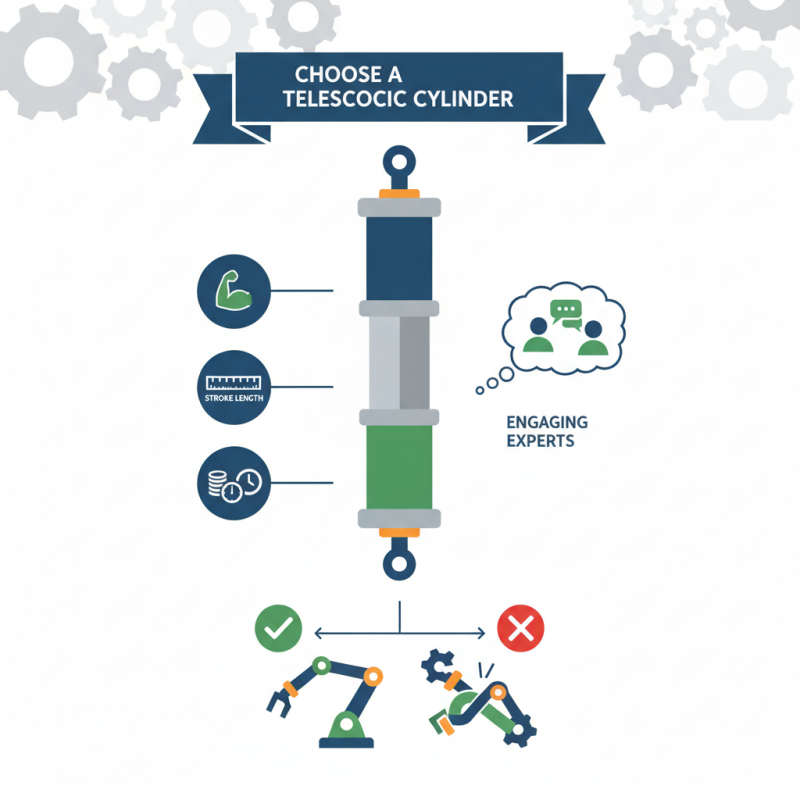
Choosing the right Telescopic Cylinder can significantly impact your project’s success. Understanding your specific needs is crucial. This component plays a key role in many applications, from construction to transportation. Selecting the wrong type can waste time and resources.
Consider the different specifications that Telescopic Cylinders offer. Options vary in size, force, and stroke length. Evaluating these factors is essential for optimal performance. A cylinder that is too small may not provide the necessary power. Conversely, one that is too large can cause inefficiencies.
Additionally, engaging with experts in the field can help you make informed decisions. Their experiences can guide you in choosing a high-quality cylinder. However, there may be conflicting opinions, and not all advice will be applicable. It’s vital to reflect on your unique situation and requirements before making a purchase.
Understanding the Basics of Telescopic Cylinders
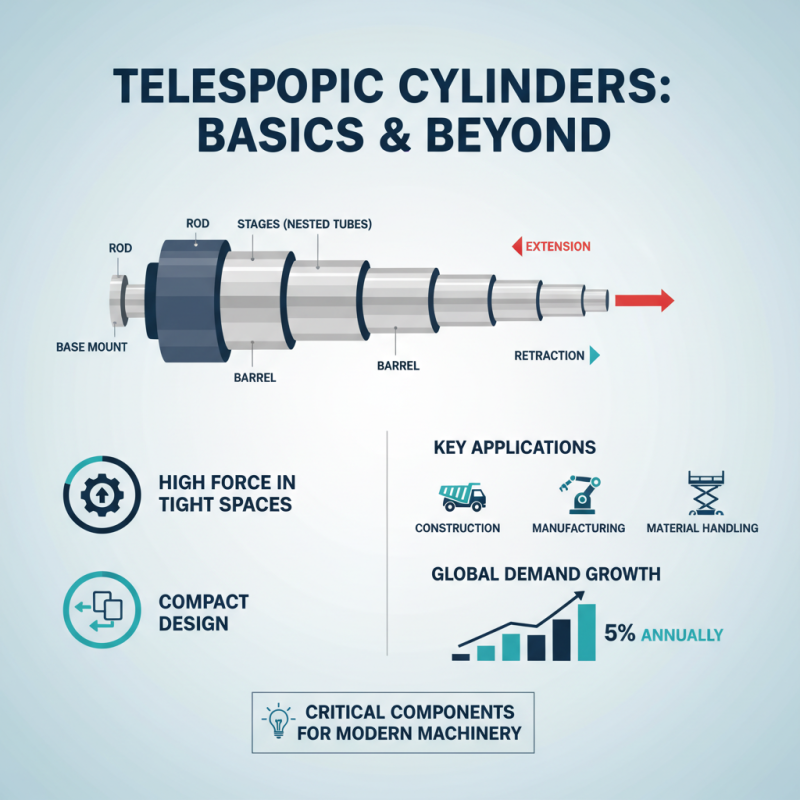
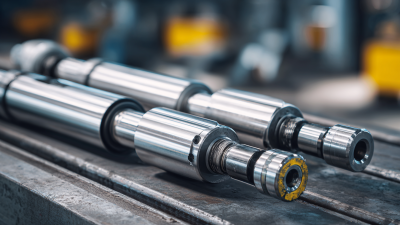
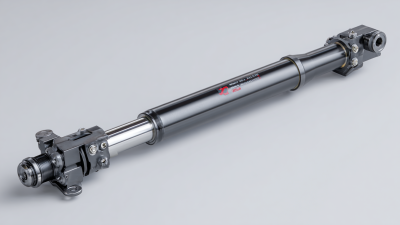
Telescopic cylinders are critical components in various machinery and vehicles. Their design allows for significant extension and retraction, enabling applications in tight spaces. These cylinders typically consist of multiple nested tubes, which provide a compact solution for generating high force in limited areas. According to industry reports, the global demand for telescopic cylinders is expected to grow by approximately 5% annually, reflecting their increasing importance in construction and manufacturing.
Understanding the basics of telescopic cylinders is essential for making informed decisions. Stroke length and load capacity are two primary factors. Manufacturers often recommend determining the required stroke length before selecting a cylinder. Yet, this decision can be challenging. A common oversight is underestimating load capacity needs, leading to inefficient performance. Data from the International Fluid Power Society indicates that over 30% of machinery failures are due to improperly sized cylinders.
The materials used in telescopic cylinder construction also affect performance and longevity. Common materials include steel and aluminum, each offering distinct advantages. Steel is robust but can be heavier. Aluminum is lighter but may not handle as much stress. Each material's cost and performance trade-offs should be carefully considered. Inconsistent quality among manufacturers can lead to unexpected failures, underscoring the need for thorough research and expert consultation in the selection process.
Identifying Your Specific Application Requirements
When selecting a telescopic cylinder, it’s essential to identify your specific application requirements. Consider the load capacity you need. Different tasks demand different strengths. For example, lifting heavy equipment requires robust cylinders. On the other hand, lighter applications can work with smaller models. This step helps streamline your choices and avoids unnecessary options.
Another critical aspect is the stroke length. Measure the distance your application will need. A precise measurement ensures that you choose a cylinder that can reach the desired height or depth. Remember that choosing a cylinder too short can hinder productivity. Similarly, a longer cylinder may be more difficult to fit in tight spaces.
Do not overlook the environmental conditions. Is your cylinder going to work outdoors, exposed to elements? In such cases, consider corrosion-resistant materials. Additionally, think about temperature ranges. This reflection on your specific needs contributes to selecting a reliable cylinder. It helps you avoid mistakes that can lead to downtime or increased costs. The right information is fundamental for achieving efficiency in your operations.
How to Choose the Best Telescopic Cylinder for Your Needs? - Identifying Your Specific Application Requirements
| Application |
Load Capacity (tons) |
Stroke Length (mm) |
Material |
Operating Pressure (MPa) |
Weight (kg) |
| Construction Machinery |
10 |
500 |
Steel |
25 |
15 |
| Automotive Industry |
5 |
300 |
Aluminum |
20 |
8 |
| Agricultural Equipment |
8 |
450 |
Steel |
22 |
12 |
| Marine Applications |
7 |
400 |
Stainless Steel |
30 |
10 |
| Mining Equipment |
15 |
600 |
High Carbon Steel |
28 |
18 |
Evaluating Key Features of Telescopic Cylinders
When evaluating telescopic cylinders, several key features must be considered. The cylinder's stroke length directly impacts its usability. In industrial applications, for instance, optimal stroke length can lead to improved efficiency. A report by the International Organization for Standardization (ISO) states that equipment downtime can be reduced by up to 30% when the right stroke length is chosen.
Another important feature is the material quality. Telescopic cylinders often undergo heavy stress, and choosing durable materials is critical. Reports indicate that cylinders made from high-strength steel can typically withstand higher loads than those made from standard alloys. However, users need to balance cost and durability. An overly durable cylinder may lead to unnecessary expenses, while a cheaper option might fail prematurely.
Additionally, pay attention to the sealing systems. Quality seals prevent leaks and contamination. A survey from the Hydraulic Alliance revealed that up to 15% of hydraulic failures stem from inadequate sealing. Understanding the environment in which the cylinder will operate is vital. For example, cylinders used in corrosive environments require specialized seals, adding complexity to the selection process. An informed choice here can safeguard against future failures.
Comparing Different Materials and Designs
When selecting a telescopic cylinder, the material and design are critical factors.
Aluminum and steel are common materials, each offering distinct advantages.
Aluminum is lightweight and resistant to corrosion, making it suitable for outdoor applications.
Steel, on the other hand, provides strength and durability for heavy-duty tasks.
Assessing the environmental conditions can guide your choice. If you are working in a moist area,
aluminum may perform better for longevity.
The design of the cylinder also plays a crucial role in its functionality.
Single-stage cylinders extend smoothly but have limited reach.
Multi-stage designs can achieve greater lengths, yet they often come with more complexity.
Consider the needed stroke length.
It’s essential to evaluate how the design fits your specific application.
Weight distribution is important too.
A poorly designed cylinder may affect the stability of your machinery.
Choosing the right cylinder can be challenging.
Some may overlook the impact of design on performance.
Reflect on what you truly need from the cylinder.
Are you prioritizing
weight,
strength, or
durability?
Not all options will suit every scenario.
Gathering
detailed specifications can provide clarity.
It’s wise to consult with
experts if you feel uncertain.
Considering Maintenance and Durability Factors
When selecting a telescopic cylinder, maintenance and durability are crucial. A well-maintained cylinder has a longer lifespan and performs better. Regular inspections can prevent unexpected failures. Look for signs of wear, such as scratches or rust. Keep an eye on the seals; they should be intact to prevent leaks.
Tips for maintenance: Clean the cylinder regularly. Use appropriate lubricants to keep it functioning smoothly. Store it in a dry place to avoid corrosion. These actions can significantly enhance durability.
Consider the environment where the cylinder operates. High temperatures or exposure to chemicals can affect performance. Choose materials that withstand such conditions. Investing in the right features can save costs in the long run. Remember, not all cylinders are created equal. It’s essential to evaluate your specific needs closely.