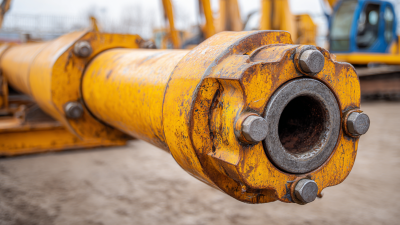
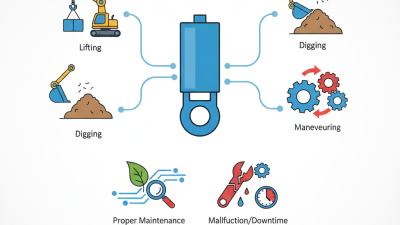
How to Choose the Best Hydraulic Cylinder for Excavator?
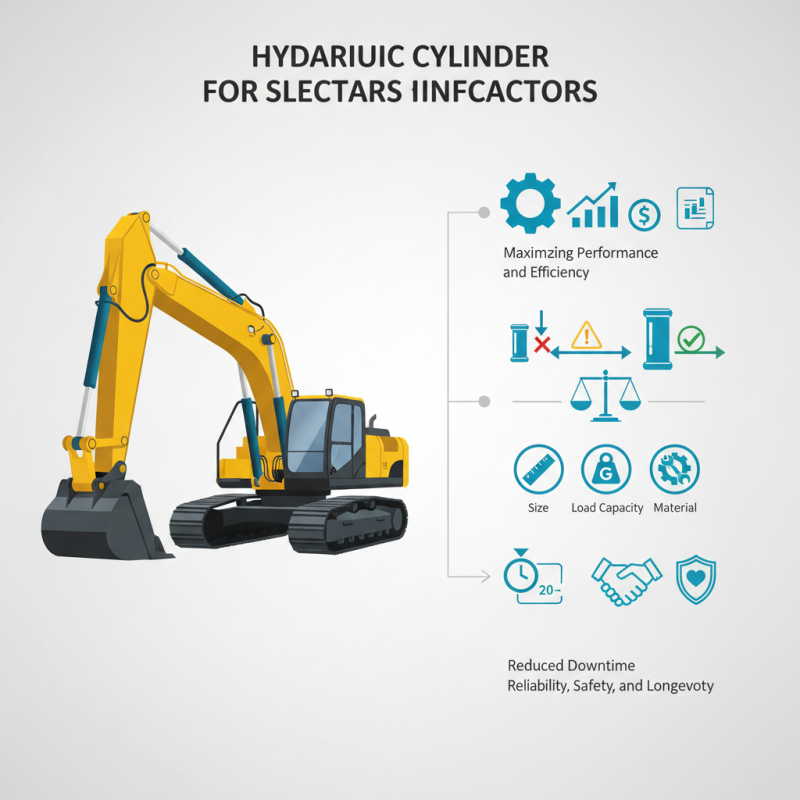
Choosing the right hydraulic cylinder for excavators is crucial for maximizing performance and efficiency. According to a recent industry report, hydraulic cylinders represent over 30% of the total cost of excavator parts. This statistic highlights the importance of selecting high-quality components that align with specific operational needs.
Hydraulic cylinders are vital for controlling movement and power in excavators. Factors such as size, load capacity, and material can significantly affect their performance. For instance, using a cylinder that is too small may lead to performance issues and increased wear. On the other hand, a cylinder that exceeds specifications may result in inefficient operations.
Investing time in understanding the features of hydraulic cylinders for excavators can prevent costly mistakes. Research suggests that improper selection can lead to a 20% increase in operational downtime. Therefore, it's essential to examine the hydraulic system's requirements and consult with experts. This approach not only enhances reliability but also ensures the safety and longevity of the excavator.
Factors to Consider When Selecting Hydraulic Cylinders for Excavators
Choosing the right hydraulic cylinder for an excavator is critical for optimal performance. Several factors play a role in this decision. The operating pressure is paramount. Most excavators run at pressures around 3,000 to 6,000 psi. Selecting a cylinder rated for higher pressure ensures reliability under stress.
Another important consideration is the rod diameter. A larger rod diameter increases strength and reduces the risk of buckling, especially in heavy-duty applications. Industry reports indicate that cylinders with a rod diameter increase of just one inch can improve lifting capacity by up to 20%. Alongside this, stroke length directly influences how deep an excavator can dig. A longer stroke enhances versatility but may increase wear and tear.
Material selection for the cylinder construction can’t be overlooked. High-strength steel or chrome-plated rods can resist corrosion and wear, extending the cylinder’s lifespan. However, cost is a factor. Choosing a more durable material may seem expensive upfront, but it can reduce replacement costs significantly over time. Balancing durability with budget is a common challenge. Selecting the right hydraulic cylinder involves a blend of technical knowledge and real-world application insights to meet specific project needs.
Understanding Different Types of Hydraulic Cylinders in Excavators
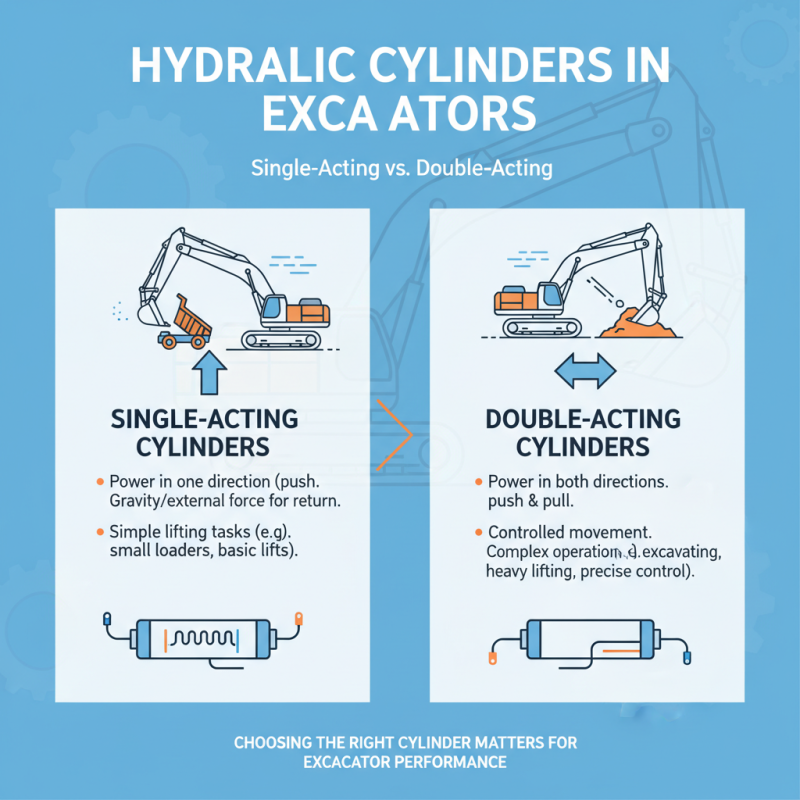
When choosing hydraulic cylinders for excavators, it is crucial to understand their types and applications. Hydraulic cylinders can be single-acting or double-acting. Single-acting cylinders use hydraulic power in one direction, commonly used for simple lifting tasks. In contrast, double-acting cylinders provide hydraulic power in both directions. This versatility makes them suitable for more complex operations, like digging and lifting heavy loads.
According to a recent industry report, more than 70% of modern excavators utilize double-acting hydraulic cylinders. These cylinders are preferred due to their efficiency. They allow for faster cycle times, which improves overall productivity on job sites. Additionally, consider the cylinder's bore size and stroke length. Larger bore sizes can offer greater force, but they also add weight. The balance between power and weight is key to optimal performance.
Operator comfort and control also matter. Poorly matched cylinders can impact how easily an operator maneuvers the excavator. This can lead to fatigue and decreased efficiency. It's not uncommon for operators to struggle with control if the cylinder specifications do not align with the machine's capabilities. Reviewing technical manuals and consulting with experts can significantly improve the selection process.
Key Specifications for Evaluating Hydraulic Cylinder Performance
When evaluating hydraulic cylinder performance for excavators, several key specifications come into play. These include bore diameter, stroke length, and working pressure. The bore diameter directly affects lifting capacity. A larger diameter often means higher strength but can also increase weight. Hydraulic cylinders with a bore diameter of 5 to 6 inches typically provide optimal performance for most excavators.
Stroke length is another critical factor to consider. This measurement indicates how far the cylinder can extend, directly impacting the reach and digging depth of the excavator. A standard stroke length often ranges from 24 to 36 inches for small to mid-sized excavators. According to industry standards, stroke lengths exceeding these limits can lead to mechanical stress, which may not be immediately visible.
Working pressure is equally significant. Typical hydraulic systems operate between 2,200 and 3,000 psi. Running a hydraulic cylinder beyond its pressure rating can not only reduce efficiency but also lead to catastrophic failures. The failure rate of hydraulic cylinders under excessive pressure can rise significantly, highlighting the importance of adhering to specified limits. Regular maintenance and pressure testing can help identify potential risks before they escalate. Understanding these specifications ensures optimal performance and longevity of the hydraulic system.
Hydraulic Cylinder Performance Comparison for Excavators
Assessing Compatibility with Excavator Models and Attachments
When selecting a hydraulic cylinder for an excavator,
compatibility is crucial.
Excavators come in various models, each with specific mounting points and structural requirements.
A detailed analysis of your excavator's specifications is essential.
According to industry reports, approximately 30% of hydraulic cylinder failures stem from
mismatched specifications. This highlights the need for precise compatibility checks.
Assessing compatibility involves examining the cylinder's dimensions, stroke length, and mounting style.
A cylinder's bore size must match the excavator's hydraulic system to ensure optimal performance.
Furthermore, attachments play a significant role. For instance, certain hydraulic attachments require specific cylinder capabilities,
like extended lengths for deep digging. Research indicates that improper matching can result in
reduced efficiency and increased wear.
It's also important to consider the working conditions.
Different models may perform better in varied environments. For example, cylinders exposed to extreme temperatures
may require special seals. Each choice can lead to unforeseen issues.
A thoughtful evaluation of these factors can prevent costly mistakes
and prolong the life of both the cylinder and the excavator.
Maintenance Tips for Enhancing the Longevity of Hydraulic Cylinders
Hydraulic cylinders are vital for an excavator's performance. To enhance their longevity, regular maintenance is crucial. Regular inspection of seals and hoses can prevent leaks. Replacing worn-out seals can save you time and money in the long run. Additionally, keeping the hydraulic fluid clean is essential. Dirty fluid can cause wear and tear on internal components.
Monitor the operating temperature of the hydraulic system. Overheating can lead to cylinder damage. Also, be cautious of any unusual sounds when the excavator operates. Strange noises may indicate a problem that requires immediate attention. Ensure that the cylinder rods are free of dirt and debris. This simple step can prevent damage to seals and improve performance.
Remember, not all maintenance is straightforward. Sometimes, issues can be hidden. It is important to be thorough during inspections. Even small visible damages can lead to bigger problems. Adopting a proactive approach will help extend the life of your hydraulic cylinders. Stay informed and attentive to ensure optimal performance.