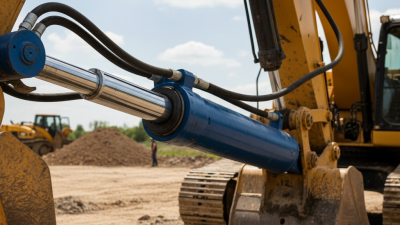
Best Excavator Hydraulic Cylinder Features and Applications?
In the construction industry, the performance of the excavator hydraulic cylinder is crucial. According to John Stevens, a renowned hydraulic systems expert, "The efficiency of an excavator greatly depends on its hydraulic cylinder." This statement underscores the importance of understanding the various features and applications of these components.
Excavator hydraulic cylinders are designed to generate powerful force and precise control. They enable the boom, arm, and bucket to move efficiently. Each cylinder must withstand extreme pressures and harsh conditions on job sites. Despite innovations, challenges remain in maintaining these cylinders for optimal performance.
Users often overlook routine maintenance, which can lead to costly repairs. Recognizing the signs of wear and tear is essential. Operators should regularly inspect seals and fluids. Awareness of these factors can greatly enhance the lifespan of an excavator hydraulic cylinder. In a demanding field, attention to these details can make all the difference.
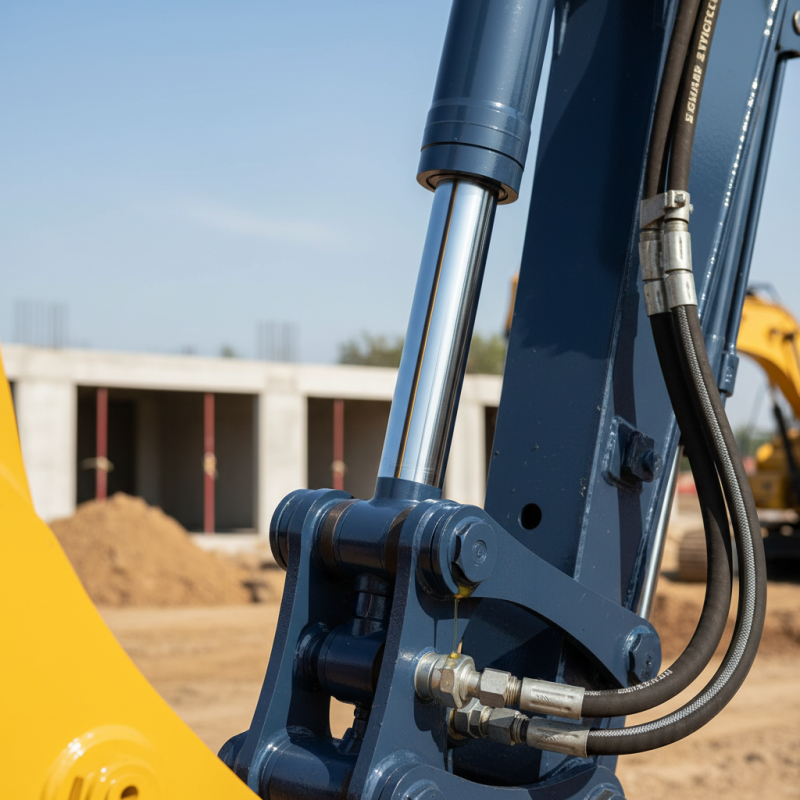
Key Features of Excavator Hydraulic Cylinders
Excavator hydraulic cylinders play a crucial role in construction and heavy machinery. They are designed to provide the necessary power to lift and move heavy loads. With advancements in technology, today's hydraulic cylinders are more efficient and durable than ever. According to a recent industry report, over 70% of excavator performance depends on these cylinders.
Key features include high-pressure performance, typically ranging from 2,500 to 4,500 PSI. This ensures they can handle demanding tasks. The size and bore of a hydraulic cylinder greatly influence its lifting capacity. Larger cylinders offer greater lift ability, but they also add weight to the excavator. Balancing weight and power remains a significant challenge.
Maintenance is another vital aspect. Many operators overlook cylinder inspection, leading to costly repairs. Reports indicate that up to 30% of hydraulic system failures are linked to poorly maintained cylinders. Regular checks can prevent system downtime, increasing overall productivity. Operators must stay informed about wear and tear to address issues promptly.
Best Excavator Hydraulic Cylinder Features and Applications
| Feature |
Description |
Typical Applications |
Benefits |
| High Pressure Resistance |
Designed to withstand high-pressure systems in excavators. |
Excavation, lifting, and grading operations. |
Improved efficiency and safety during operation. |
| Durable Seals |
Prevents leaks and ensures hydraulic fluid integrity. |
Long-term operation in harsh environments. |
Minimized maintenance costs and downtime. |
| Compact Design |
Space-efficient design to fit various excavator models. |
Urban construction and tight access areas. |
Enhanced maneuverability and versatility. |
| Carbon Steel Construction |
Sturdy material for increased strength and longevity. |
Heavy-duty excavation tasks. |
Reduces wear and extends service life. |
| Smooth Operating Rod |
Finely machined rod for optimal performance. |
All excavation tasks requiring precise motion. |
Improves operation smoothness and reduces wear. |
Types of Excavator Hydraulic Cylinders and Their Functions
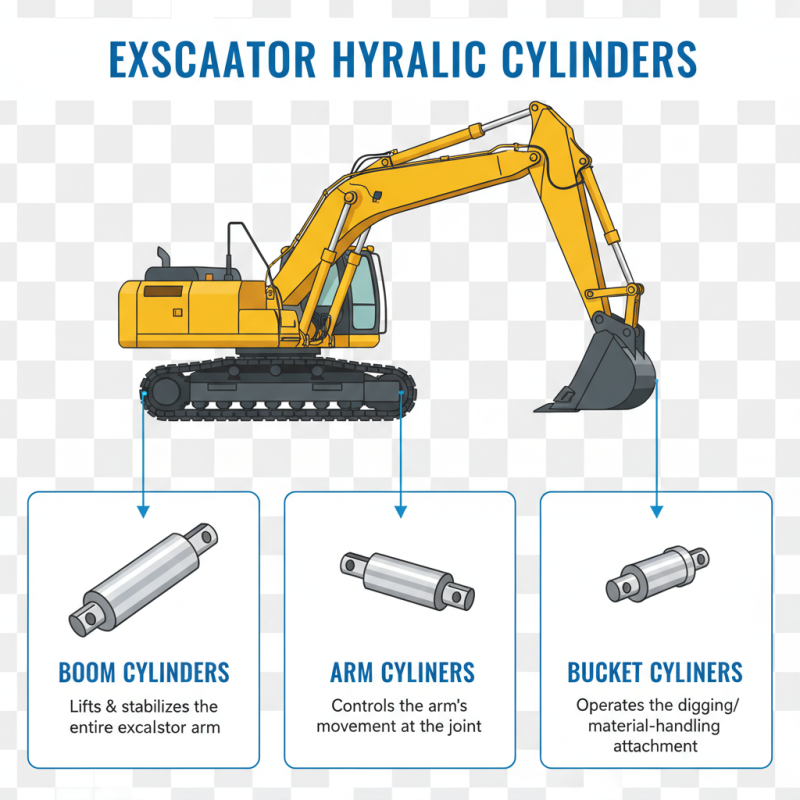
Excavator hydraulic cylinders play a crucial role in heavy machinery operations. They primarily come in several types, each serving distinct functions. The most common types include boom cylinders, arm cylinders, and bucket cylinders. Boom cylinders lift the entire arm of the excavator. They provide the necessary force for elevation and stability. Arm cylinders control the movement of the joint connecting the boom and arm. Bucket cylinders, on the other hand, handle the attachment used for digging or moving materials.
Understanding these distinctions is essential. Choosing the right cylinder impacts efficiency and performance. For example, a worn bucket cylinder can lead to decreased digging power. This not only affects productivity but may increase operating costs. Regular inspections can help identify wear and tear.
**Tips:** Always check for leaks in hydraulic cylinders. Small leaks can lead to significant issues. Monitor the performance of your excavator regularly. Timely maintenance can extend the life of your equipment. Keeping spare parts handy may save time during repairs.
Common Applications of Excavator Hydraulic Cylinders in Construction
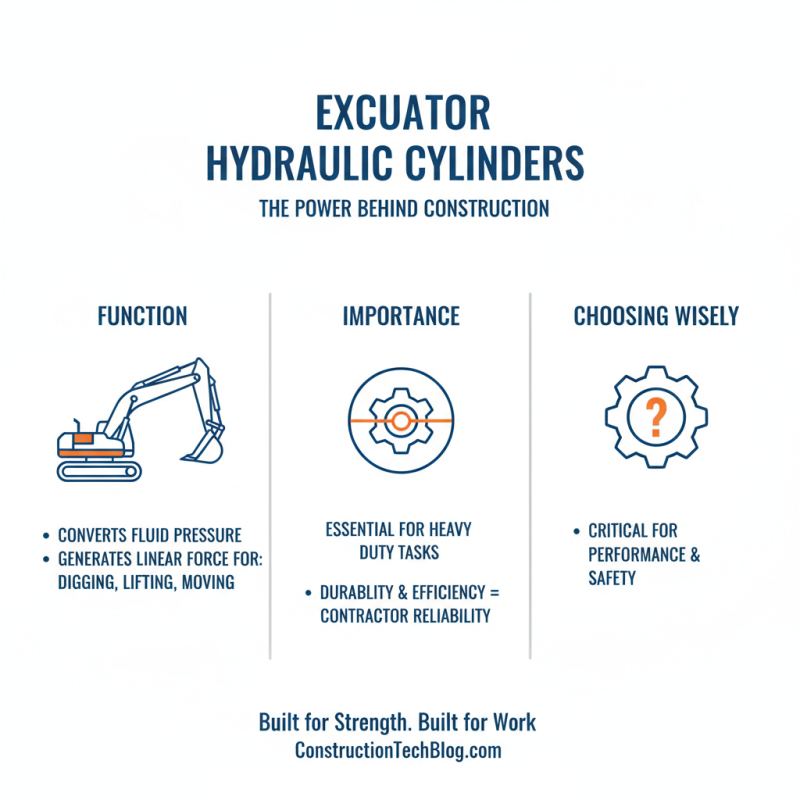
Excavator hydraulic cylinders are pivotal in construction. They operate by converting hydraulic fluid pressure into linear force. This makes them essential for digging, lifting, and moving heavy materials. Contractors rely on these cylinders for their durability and efficiency. However, choosing the right one can be tricky.
Common applications of hydraulic cylinders include earthmoving and demolition. Excavators equipped with these cylinders perform tasks like trenching and grading. In demolition projects, these cylinders allow for precise control when breaking down structures. They help excavators maneuver in tight spaces. Still, there are challenges. Hydraulic systems require regular maintenance. Neglecting this can lead to costly repairs and downtime.
Moreover, operators must understand the limitations of these cylinders. Overloading can damage the system and cause accidents. Training crews is vital to ensure safety. Not every job is straightforward. A miscalculation can lead to inefficiencies. In construction, every detail counts, and oversight can be expensive.
Maintenance Tips for Enhancing Hydraulic Cylinder Longevity
Hydraulic cylinders are vital in excavators.
Proper maintenance extends their lifespan significantly. Research shows that
routine inspections can prevent up to 30% of hydraulic failures.
Regular checks on seals and fittings are crucial. A small crack can lead to major leaks.
These leaks decrease efficiency and increase costs.
Fluid quality is critical.
Contaminated oil can shorten cylinder life.
Industry experts recommend changing hydraulic fluid every 1,000 hours.
In addition, using the right filters can help maintain fluid integrity.
This practice is essential for optimal performance.
Monitoring operating conditions is essential. Extreme temperatures can affect hydraulic fluid behavior.
Keeping cylinders clean reduces wear and tear. Simple actions like wiping down the cylinder after use
can make a difference. Neglect can lead to rust and corrosion.
Regular lubrication helps maintain smooth operation. However, too much grease can trap dust, causing more damage.
Each maintenance task requires careful consideration to improve lifetime efficiency.
Innovations in Hydraulic Cylinder Technology for Excavators
Hydraulic cylinders are crucial for excavator performance. Innovations in technology have enhanced their efficiency and durability. The latest designs feature improved seals and better materials, reducing wear over time. These advancements lead to more reliable operations and less maintenance. Engineers are exploring smart technology. Sensors now monitor performance in real-time. This helps in preventive maintenance and reduces downtime significantly.
Tips: Regular inspections are important. Look for leaks or unusual noises. Early detection prevents major issues later.
Advanced materials make hydraulic cylinders lighter and stronger. Composite materials can withstand high pressures. This reduces the overall weight of the excavator, enhancing fuel efficiency. However, designers must balance weight and durability in these innovations. Achieving this balance is often a challenge.
Tips: Consider the environment. High temperatures can affect cylinder performance. Proper cool-down periods are essential for longevity.
Best Excavator Hydraulic Cylinder Features and Applications
This chart illustrates the specifications of excavator hydraulic cylinders, showcasing key features such as load capacity, stroke length, operating pressure, and cycle time.